Which Home Improvements Actually Add Value? A Richmond Homeowner’s Guide
Walk through any home improvement store and you'll find plenty of projects that promise to make your home better, more comfortable, or more valuable. The harder question is figuring out which improvements are actually worth the money, especially when you may eventually sell.
A recent Opendoor article highlighted several home improvements that can offer a strong return on investment, including kitchen and bathroom updates, energy efficiency, curb appeal, flooring, and outdoor living. The article draws on national remodeling and real estate data to identify projects that can improve both everyday enjoyment and resale appeal.
Here in the Richmond area, though, I think there's an important piece missing from the conversation: the best improvement for your home depends on the home itself, the neighborhood, and your plans.
After nearly 20 years in real estate, I've seen plenty of homeowners spend money on projects that looked great but didn't necessarily make financial sense. I've also seen relatively simple improvements make a home much easier to sell.
So let's look at some of the projects worth considering, along with a few things I'd keep in mind before reaching for the checkbook.
1. Start With What's Broken
This is probably the most important point I'd add to any list of "best home improvements."
Fix deferred maintenance before you worry about upgrades.
A new kitchen is great. New flooring can make a huge difference. Fresh landscaping improves curb appeal. But none of those things make a failing HVAC system, an aging roof, or a moisture problem disappear.
I've talked about this quite a bit in my recent videos on deferred maintenance. Buyers notice the big-ticket items behind the pretty finishes, including the roof, HVAC, windows, crawl space, and other major systems.
A homeowner preparing to sell should think about improvements in this order:
-
Address problems that need to be fixed.
-
Take care of obvious maintenance.
-
Improve the home's overall appearance.
-
Consider larger upgrades that make sense for the neighborhood and likely buyer.
That approach can save you from spending $30,000 on a kitchen remodel only to discover that the roof is the issue buyers are negotiating over.
2. A Minor Kitchen Update
You don't necessarily need to create a $75,000 dream kitchen to make your home more appealing. Sometimes replacing dated countertops, updating cabinet hardware, painting cabinets, improving lighting, and replacing older appliances can make a significant difference.
And in Richmond, I'd pay close attention to the neighborhood.
A kitchen that makes sense in a $400,000 home isn't necessarily the right kitchen for a $1 million home, and spending significantly more than neighboring properties support may not produce the return you're hoping for.
3. Bathrooms
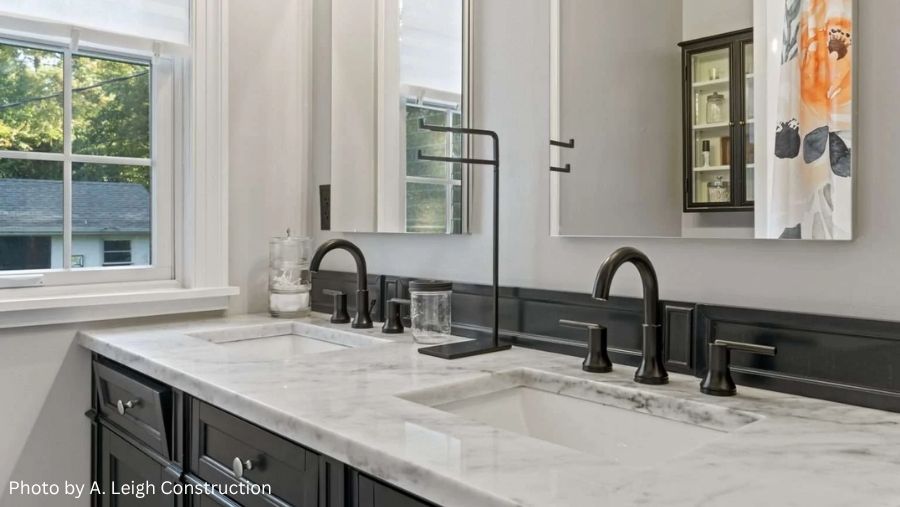
Bathrooms are another area where a reasonable update can make a home feel much newer.
Think about replacing dated fixtures, updating the vanity, improving lighting, replacing worn flooring, or modernizing an old shower.
Again, I'd resist the temptation to automatically assume that bigger is better.
The goal isn't necessarily to create the bathroom you've always dreamed about. The goal is to create a bathroom that fits the home, the neighborhood, and the expectations of today's buyers.
4. Energy Efficiency and Major Systems
This is one area where I think homeowners sometimes overlook the connection between maintenance and value.
A newer HVAC system isn't necessarily something buyers get excited about the way they might react to a remodeled kitchen. But knowing the HVAC was recently replaced can remove a significant concern from a buyer's mind.
The same goes for insulation, windows, and other major systems.
That's why I often tell sellers that you don't always get dollar-for-dollar credit for replacing a major system, but you can avoid giving buyers a reason to discount your home.
That's an important distinction.
5. Curb Appeal
First impressions still matter.
I'd put landscaping and general curb appeal high on the list for Richmond homeowners because these improvements don't necessarily have to be expensive.
Before listing, consider:
-
Fresh mulch
-
Clean landscaping beds
-
Trimmed shrubs
-
A well-maintained lawn
-
Clean walkways
-
Updated exterior lighting
-
A freshly painted front door
-
Clean gutters
-
Power washing where appropriate
These are relatively simple improvements that can make your home photograph better and create a better first impression when buyers arrive.
And in today's market, good photography matters. Buyers often make their initial decision about whether to visit your home based on the listing photos.
6. Flooring
Flooring is another improvement that can dramatically change how a home feels.
Worn carpet, damaged hardwood, mismatched flooring, or dated tile can make an otherwise well-maintained home feel older than it really is.
I've written more about this in Types of Flooring Explained: Materials, Pros, Cons, and Best Uses, where I look at the differences between hardwood, LVP, laminate, tile, and carpet.
The key is consistency.
You don't necessarily need to replace every floor in your house. Sometimes replacing the most visibly worn areas or creating a more consistent look throughout the main living spaces makes more sense.
7. Outdoor Living
Outdoor living spaces continue to be popular with buyers, and Richmond's climate gives homeowners plenty of opportunities to enjoy them.
Decks, patios, screened porches, fire pits, and outdoor kitchens can all add appeal, however this is another situation where I'd think carefully about the neighborhood.
A well-designed patio or deck that fits naturally with the house can be a great selling feature. A $40,000 outdoor kitchen in a neighborhood where most homes don't have one may not produce the same financial return.
Enjoyment matters, too.
If you're planning to stay in your home for another five or ten years, don't make every renovation decision based solely on resale value. You're going to live there.
8. Smart Home Features
Smart thermostats, security systems, smart locks, lighting, and other technology can add convenience and appeal.
I'd put these lower on my list when preparing a home for sale, though.
A smart thermostat isn't going to overcome an old HVAC system. A video doorbell isn't going to compensate for a roof that needs replacement.
Think of smart technology as a nice addition, rather than a reason to renovate.
9. Third Floor/Attic Conversion
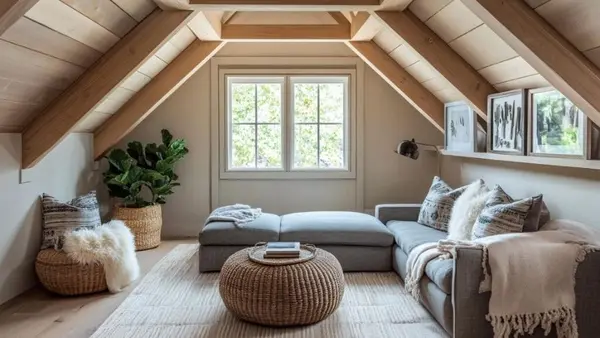
There's another home improvement opportunity that's particularly relevant here in the Richmond area: the unfinished third floor.
In many of the larger suburban subdivisions around Richmond, you'll find homes with what is technically an attic but is really a full unfinished third floor. These spaces can offer hundreds of additional square feet and, depending on the home, can potentially be converted into bedrooms, offices, recreation rooms, or additional living space.
That can make an attic conversion one of the more significant improvements a homeowner can consider.
I've written a separate guide about this topic, Should You Finish Your Unfinished Third Floor?, including what to consider before starting the project, potential costs, permits, ceiling height, HVAC, bathrooms, and how finished space can affect your home's value.
So Which Improvements Should You Actually Make?
There's no universal answer.
The right project depends on:
-
How long you plan to stay in the home
-
Your home's current condition
-
Your neighborhood
-
The price range you're competing in
-
What comparable homes are offering
-
Your budget
-
Whether you're improving the home for yourself or preparing to sell
That's why I don't recommend looking at a national list of renovations and automatically assuming you should complete all of them.
Your Richmond home has its own story.
A kitchen remodel may make sense in one neighborhood. New flooring may be a better investment in another. And in some cases, the smartest thing you can do is spend the money fixing the roof, HVAC, crawl space, or other deferred maintenance you've been putting off.
The Bottom Line
Home improvements can absolutely add value, but not every dollar you spend comes back to you when you sell.
The goal isn't to renovate your home until it's perfect. It's to spend your money wisely and make improvements that make sense for your home, your neighborhood, and your plans.
The national data from Opendoor provides a useful starting point, but real estate is local. What makes sense in another part of the country may not be the best choice for a homeowner in Richmond, Midlothian, Short Pump, Glen Allen, Mechanicsville, Ashland, or Goochland.
That's where having a local perspective can make a difference.
Thinking About Making Improvements?
Before you spend tens of thousands of dollars on a renovation, let's talk.
I'd be happy to walk through your home with you and help identify the improvements that may actually make sense for your particular situation. If you're considering selling, we can look at comparable homes in your neighborhood and determine where your money is most likely to make a difference.
And sometimes, I'll tell you not to make the improvement.
That's part of the job, too.
Source: Opendoor, "7 Best Home Improvements for 2026 That Add Value and Sell Faster," updated April 16, 2026. The article's recommendations and ROI figures are based primarily on national remodeling and real estate data and should not be interpreted as guarantees for an individual Richmond-area property.
Every move starts with a conversation
 Let's talk! I’ve proudly served the Greater Richmond area as a full-time Realtor for more than 19 years, and I’ve called Virginia home for over 25.
My goal is simple: to help you reach yours.
Jason Burke
+1(804) 291-6676
jason@brgreal.com
Categories
Recent Posts