Should You Finish Your Unfinished Third Floor?
If you've lived in one of Richmond's larger suburban subdivisions, there's a good chance you've seen it.
You walk up the stairs to the third floor and find several hundred square feet of unfinished space. Maybe there's already a window, electrical wiring, and HVAC nearby. Maybe the builder even designed the home with the third floor intended to be finished someday.
For now, though, it's mostly storage.
So the question becomes: Is finishing that space worth the money?
The answer depends on your home, your neighborhood, your plans, and what buyers in your area actually value.
And for some Richmond homeowners, that unfinished third floor could represent one of the best opportunities in the house to add usable living space.
Why Finish an Unfinished Third Floor?
The biggest advantage is pretty simple: You're adding usable space without expanding the home's footprint.
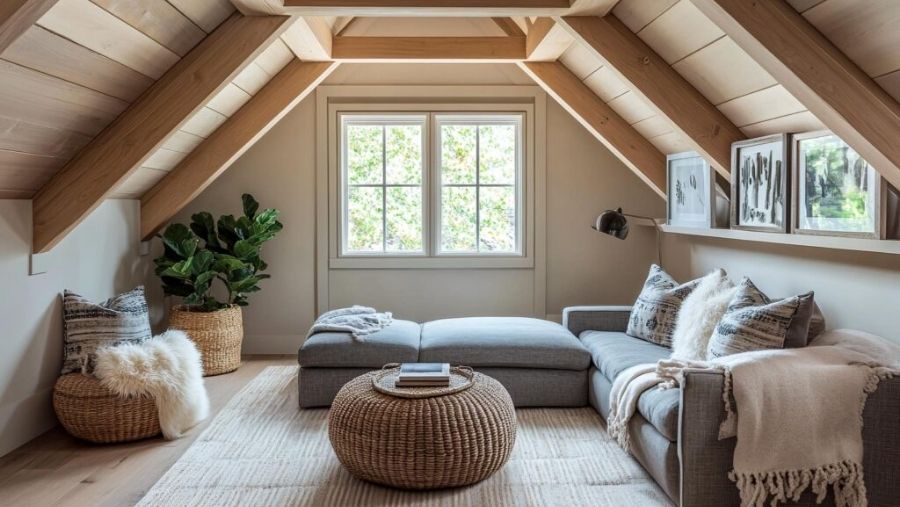
Depending on the layout, an unfinished third floor could become:
-
A bedroom
-
Guest suite
-
Home office
-
Playroom
-
Media room
-
Recreation room
-
Home gym
-
Hobby or craft space
-
Additional storage
-
A combination of living space and storage
For a growing family, that additional space can be incredibly useful.
And if you're planning to stay in the house for several more years, the value isn't just financial. You're creating space that your family can actually use.
How Much Does It Cost to Finish a Third Floor?
There's no single number because the starting point varies so much from house to house.
A relatively straightforward project with existing electrical, HVAC, windows, and good access could be considerably less expensive than a major conversion requiring new plumbing, HVAC, insulation, electrical work, windows, or structural modifications.
As a general planning range, an attic conversion into finished living space can easily run $50,000 to $150,000 or more depending on the size and complexity of the project.
The important thing is not to look at that number and assume you'll automatically add the same amount, or more, to your home's value.
Renovation cost and added market value are two different things.
That's why I'd recommend talking with a local real estate professional before beginning a major project. Looking at comparable homes in your subdivision can provide a much better indication of what buyers are willing to pay for additional finished space.
What Makes a Third Floor Count as Living Space?
This is where things get important. Building codes and appraisal standards matter.
Ceiling Height
Habitable space generally has minimum ceiling-height requirements, and sloped ceilings can complicate things.
A third floor may have plenty of floor area but still have portions that don't meet the requirements for finished living space.
Windows and Egress
If you're creating a bedroom, you'll generally need a code-compliant emergency escape and rescue opening.
That means you need to think about windows and access to the exterior before deciding what the finished space will be used for.
Heating and Cooling
A finished third floor needs to be properly heated and cooled.
Depending on your home's existing HVAC system, that could mean extending ductwork or installing an independent system such as a mini-split.
This is something to evaluate before construction begins, particularly in a third floor that can get very warm during Richmond summers.
Electrical and Lighting
An unfinished third floor may already have some electrical infrastructure, but that doesn't mean it's ready to become living space.
Additional outlets, lighting, switches, smoke and carbon monoxide detectors, and other electrical requirements may need to be addressed.
Plumbing
Adding a bathroom can make a third-floor conversion significantly more functional, especially if you're creating a bedroom or guest suite.
But running plumbing to the third floor can also add substantially to the cost of the project.
A Bathroom Can Change the Equation
A finished third floor with a bathroom is a very different proposition from an unfinished storage space.
Imagine having a third-floor guest suite with a bedroom, sitting area, and private bathroom. Or a teenager's retreat with a bedroom and full bath. Or a home office and recreation space with a half bath.
The more functional the space becomes, the more appealing it can be to future buyers.
That doesn't mean every homeowner should add a bathroom. Plumbing can be expensive, and the return depends heavily on the house and neighborhood.
Again, look at what comparable homes are offering before you decide.
Don't Forget Insulation and Ventilation
An unfinished third floor is still part of the home's thermal envelope, and finishing it changes how the space functions.
Proper insulation and air sealing are important for comfort and energy efficiency.
Ventilation and moisture management matter, too.
This is an area where I wouldn't cut corners simply to save money.
I've talked about attic issues in another post: The Most Expensive Room in Your House Might Be Your Attic. While that focuses more on traditional attic problems such as insulation, ventilation, moisture, and air sealing, many of the same principles apply when you're converting an unfinished third floor into living space.
Before finishing the area, make sure you're addressing any existing moisture, ventilation, or insulation problems.
Permits Matter
This is one of the biggest things I would emphasize to homeowners.
Get the proper permits.
Converting unfinished attic space into finished living space generally involves building permits and inspections. Depending on the scope of the project, you may also need electrical, mechanical, or plumbing permits.
It can be tempting to think, "I'll just finish it myself and worry about the paperwork later."
That's a mistake.
Unpermitted work can create problems when you eventually sell the home. It can also affect how the finished space is treated by an appraiser and whether the square footage is included in the home's official living area.
Keep your permits and documentation.
When you eventually sell, you'll want to be able to demonstrate what work was completed and that it was properly approved.
Will Finishing the Third Floor Increase Your Home's Value?
Adding finished square footage can increase a home's value, particularly when the finished area is legitimate, functional living space that compares favorably with other homes in the neighborhood.
But $60,000 spent on a renovation doesn't necessarily mean your home is now worth $60,000 more.
The market determines value.
That's why I would look at three things before starting:
- What are comparable homes selling for?
Look at homes in your subdivision with similar floor plans and finished third floors. - How much finished space do buyers actually value?
A finished third floor may be extremely desirable in one neighborhood and less important in another. - What will the project cost?
Get realistic estimates before you decide whether the potential increase in value justifies the investment.
Don't Overbuild for the Neighborhood
This is a mistake I see homeowners make with renovations.
You don't want to create the most expensive house in the neighborhood simply because you can.
If most homes around you have four bedrooms and 2,500 square feet, turning your home into a six-bedroom, 4,000-square-foot property may not produce the return you expect.
The best renovation usually fits naturally into the home and the neighborhood.
That might mean finishing the third floor as a recreation room and office rather than spending significantly more to create multiple bedrooms and bathrooms.
Should You Finish It for Yourself or for Resale?
This is an important question.
If you're planning to sell in the next year or two, I'd approach the project differently than if you're planning to stay for another decade.
If you're staying: Focus on how your family will use the space. The value you get from enjoying the additional room can be just as important as the eventual resale value.
If you're selling soon: Be much more careful about the numbers. You want to know what buyers in your neighborhood are willing to pay for the finished space before making a major investment.
And sometimes the right answer is don't finish it.
If the project will cost $80,000 but comparable homes don't support enough additional value to justify that investment, you may be better off leaving the space unfinished.
This is where local real estate knowledge becomes important.
If you're considering finishing an unfinished third floor, I'd be happy to help you look at comparable homes in your area and get a better sense of what buyers are actually paying for finished space.
Sometimes the best investment is a renovation.
Sometimes it's maintenance.
And sometimes the smartest financial decision is to leave that third floor exactly where it is.
This article is intended for general informational purposes. Building codes, permitting requirements, and appraisal treatment can vary by locality and property. Consult the appropriate local building department and qualified contractors before beginning a conversion project.
Every move starts with a conversation
 Let's talk! I’ve proudly served the Greater Richmond area as a full-time Realtor for more than 19 years, and I’ve called Virginia home for over 25.
My goal is simple: to help you reach yours.
Jason Burke
+1(804) 291-6676
jason@brgreal.com
Categories
Recent Posts